
If you search online for the world’s most epic, beautiful multi-day hikes—and I have done this hundreds of times during my hiking career—the Tour du Mont Blanc will invariably rank in the top ten. The TMB is a 165km hike encircling the Mont Blanc massif, charting a course up and down through the steep mountain passes of France, Italy, and Switzerland. It offers a rare combination of majestic scenery, challenging climbs, and extensive tourist infrastructure — meaning you can hike through spectacular landscapes all day and then order a glass of wine with dinner before tucking into a proper bed.
We hiked just a few days of the TMB over a dozen years ago and promised ourselves that we would return one day to complete the circuit. However, in the ensuing 12 years, the TMB has exploded in both popularity and price. Part of this is due to the launch of the Ultra Tour du Mont Blanc in 2003, a race that sees elite competitors completing in less than 24 hours what takes the rest of us 10 to 12 days of tough hiking.
As much as we wanted to tick this iconic trek off our bucket list, we seriously questioned whether the in-person experience would live up to the fantasy. What we imagined was a classic alpine hike where we would test our limits on the steep climbs by day and then enjoy camaraderie in the evenings with fellow hikers in basic but charming lodges. However, the reality shared on blogs, vlogs, and forums was of crowded trails and even more crowded refuges.
Booking a year ahead and still scrambling
The first clue as to what we should expect came when it was time to book our trip. We sat down a full 12 months in advance to map out our route and lock down our stays. Even then it was a squeeze to line up 10 nights of accommodations that were evenly spaced along the trail. Of course, part of our challenge with booking our accommodations was that we wanted to have private rooms and, ideally, private bathrooms for as much of the trip as possible. We had one shared room experience with a group of strangers during our first go at the TMB 12 years ago. We never again wanted to experience lying awake in a bunk all night waiting for either the snoring to stop or dawn to arrive, whichever came first.
We create a spreadsheet for each one of our trips to keep track of all the details. For the TMB, that spreadsheet quickly morphed into an extensive scenario mapping exercise juggling potential dates, top picks for accommodations, and fallback options. And there was no room for mistakes since almost all our bookings came with hefty cancellation fees.
In the end, we managed to snag almost all private stays for our 10-night trip, with the exception of one night in a shared room in Rifugio Walter Bonatti. We told ourselves that staying in a dorm would be an authentic refuge experience that would toughen us up and burnish our TMB cred.
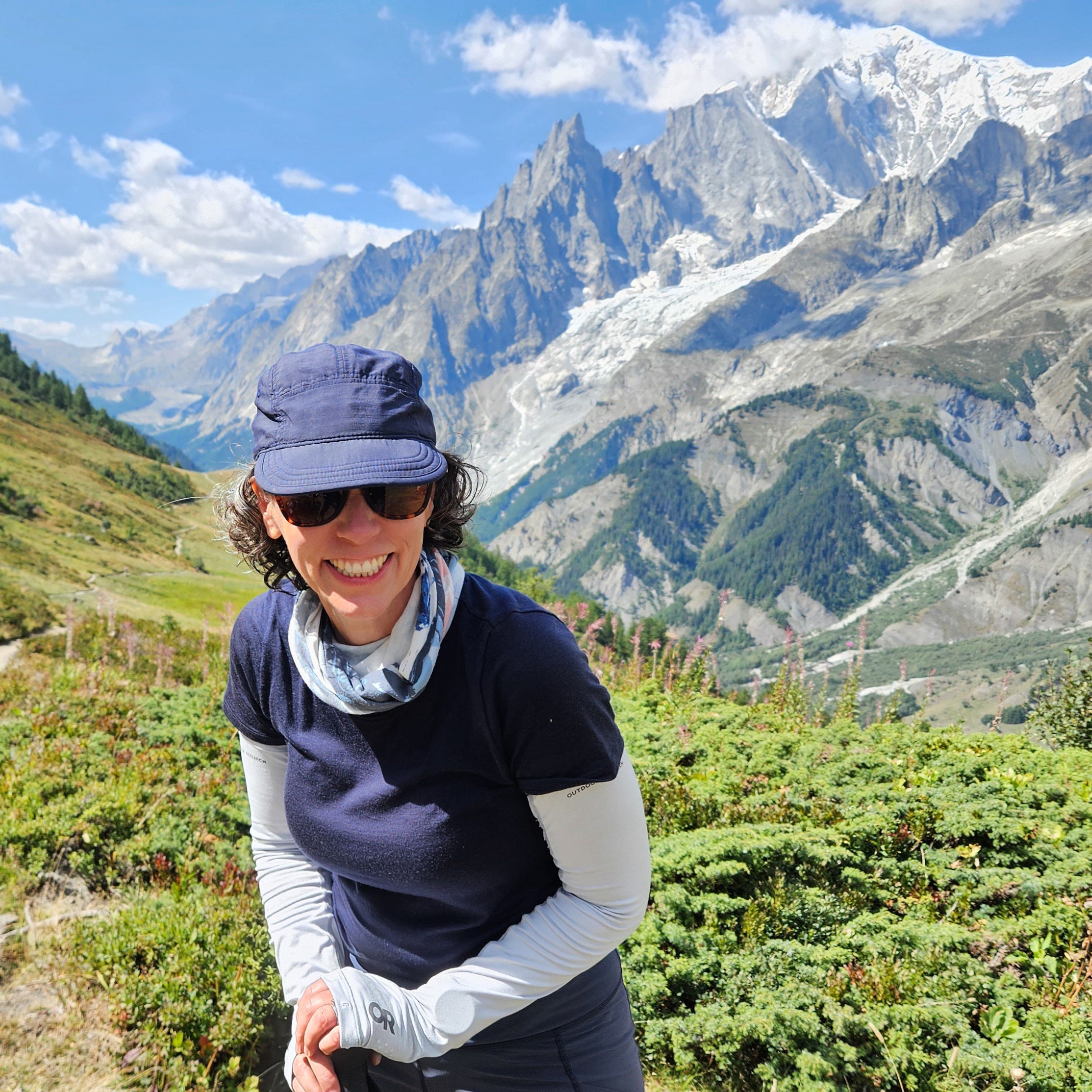
Fortunately, the beauty of the trail made up for the stress of planning. This really is an incredible and special hike with each day revealing exciting new views, whether of Mont Blanc or the surrounding peaks and valleys. Once we had slogged our way up to the high point each day, we were treated to mountainscapes as far as the eye could see. The trail was also quite varied; on any given day, we might pass through mountain ranges, forest paths, traditional villages, farmsteads, and fields with herds of cows or sheep. For a taste of the scenery, you can check out our TMB video, which also includes all our accommodations and costs.
Harder than we bargained for
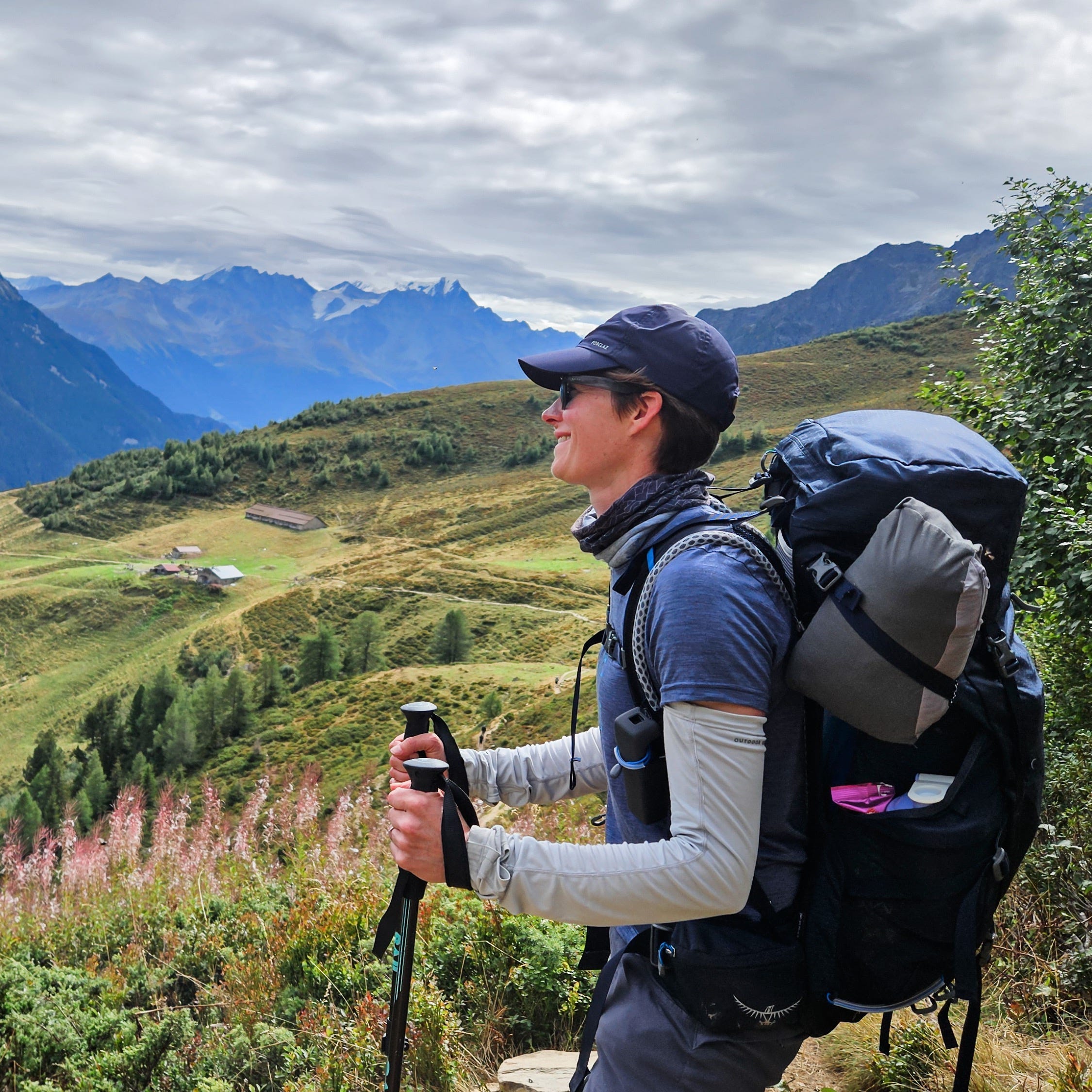
We also got the physical challenge that we were craving and then some. The TMB was certainly one of the hardest multi-day hikes we’ve ever done; the most difficult sections felt like we were hiking up stairs made of loose rubble while carrying 50 kilos on our backs (in truth, my 34L backpack likely held less than 8 kilos 😅). Almost every day included a very lengthy up and down; we typically hiked for seven to eight hours each day or more, with breaks just long enough to eat a sandwich and keep going
We spent the summer training up with weights and running but I will admit that I felt utterly exhausted on day two when we’d been hiking steadily uphill for five hours and still hadn’t reached the top. During these stretches, my mind often returned to itemizing all the things that I probably should have left at home instead of squeezing them into my backpack. For the record, on my next hike I will worry less about having a spare outfit or two “just in case.”
A few stays that made it worthwhile
The time that we invested upfront in researching accommodations and going deep into reviews paid off with a number of exceptional stays. Many hikers take a rest day on Courmayeur, one of the largest centres along the trail. We did the same, which gave us two glorious nights in Hotel Bouton d’Or, a small hotel with classic alpine decor and a truly excellent breakfast buffet. We had a ground floor room that came with a garden patio (perfect for drying our hiking clothes) and a bathtub, which was just what I needed after a few long days on the trail.
We also went deep into Google Maps to find La Grange B&B, a family-run gite that was just a couple kilometres outside the wildly expensive Swiss resort town of Lac Champex. This former farmhouse had been beautifully renovated and while the bathrooms were shared, they were so thoughtfully designed that I didn’t mind. Most importantly, unlike many of the other refuges, the owners prided themselves on providing home-made meals with locally sourced ingredients.
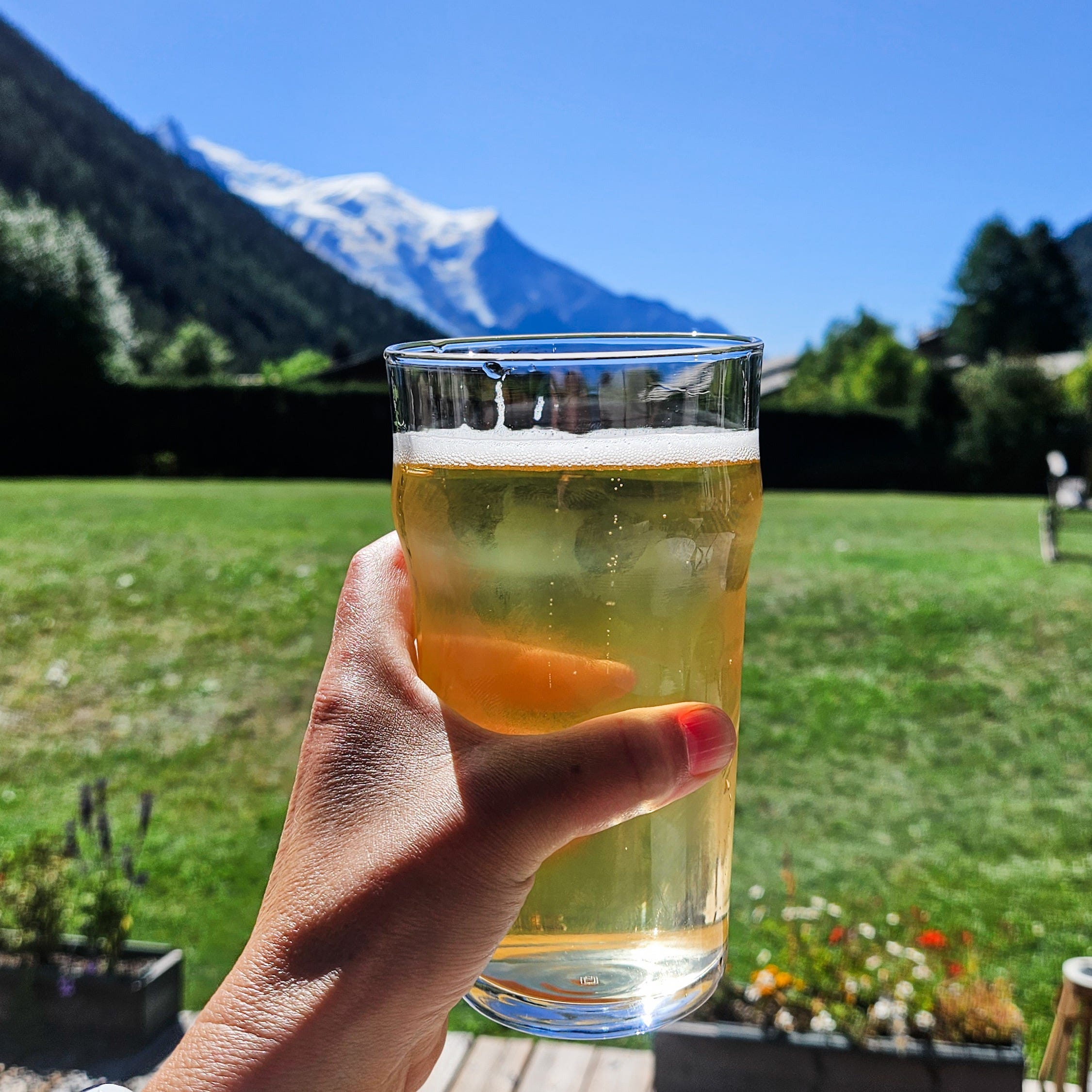
Another standout was Les Grands Montets Hôtel & Spa. For our last night on the trail, we treated ourselves to a little luxury at this alpine-themed hotel with a full spa and pool. We toasted ourselves with a post-hike panaché upon arrival—a combo of lager and lemonade—while enjoying the sparkle coming off Mont Blanc’s snowy peak in the distance. The breakfast buffet was extensive and certainly the best of the trip.
Two minutes of hot water
Of course, not every stay earned such glowing reviews. We had one night in Rifugio Walter Bonatti, named after the famous Italian mountaineer and considered one of the most iconic refuges. Certainly the location couldn’t be more spectacular with the refuge perched high on a hillside facing a mountain range. However, it is ultimately a large-scale facility that needs to efficiently house, feed, and shower up to 80 guests each night. We got lucky and were placed in a seven-person room; the largest dorm can handle dozens of people at a time, all sleeping side-by-side. Guests were allocated two minutes of hot water in the shower and breakfast was a simple offering of cereal, yogurt, white bread, and jam (no homemade preserves and fresh baked croissants here). Thankfully, since we had a full day of hiking ahead of us, one of the items we made room for in our knapsack was a bag of protein powder.
The next night, we had our first taste of Swiss pricing at Hotel du Col de Fenêtre in Val Ferret. We paid far more to stay at this traditional Swiss lodge than anywhere else during our trip and that includes the high-end Les Grands Montets. For that price, we were given a simple private room in the attic with a bathroom across the hall; fortunately we didn’t mind having a bath because there was no shower. This hotel serves the exact same dinner and dessert every single night, and a very simple breakfast of cereal, yogurt, white bread, and jam. If we wanted an egg or cheese, that cost extra. Again, the protein powder came in handy.
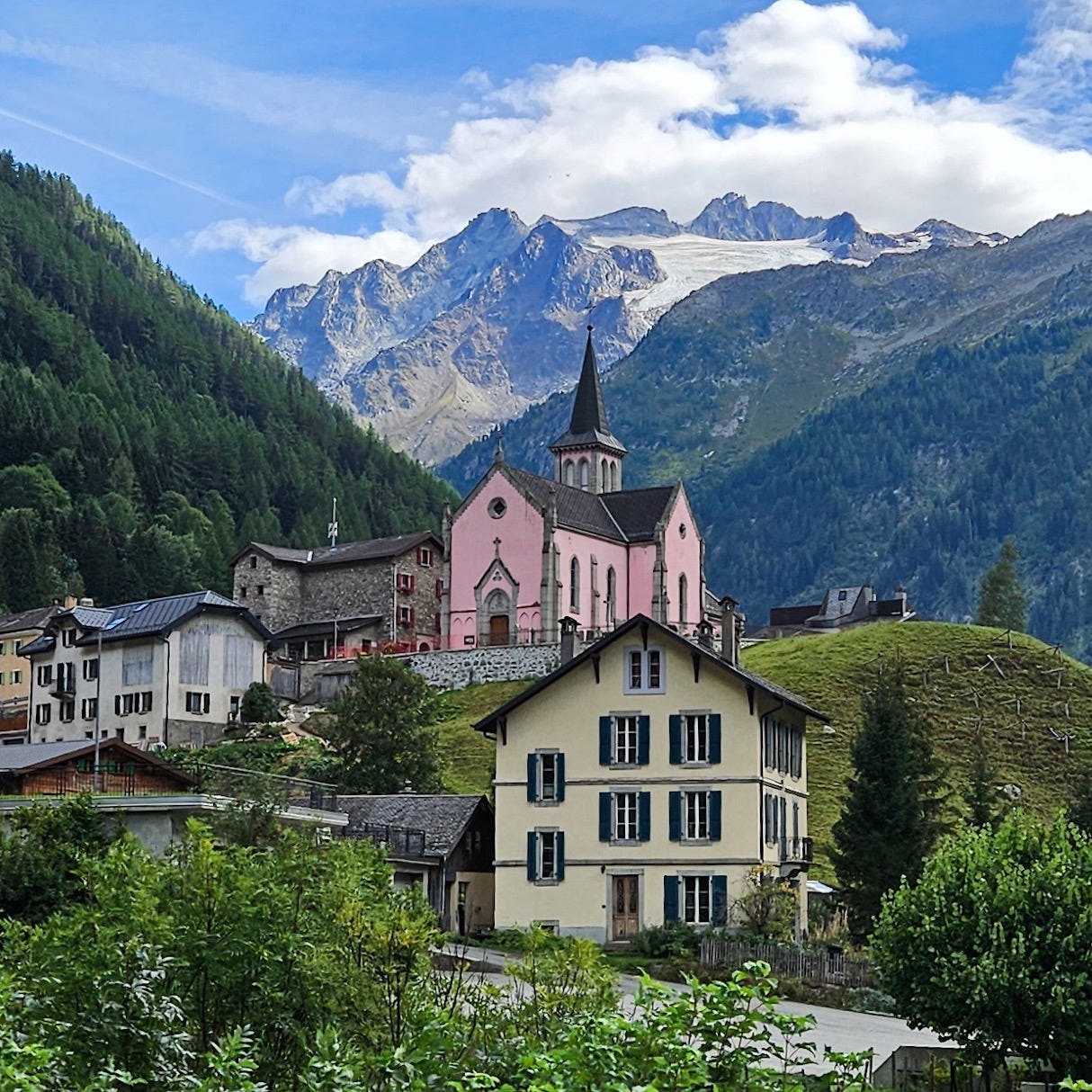
The final lowlight of the trip was our stay at La Grand Ourse in Trient. This was another 80-person refuge with a huge dining hall where the emphasis was on cost-efficient caloric intake. By this point, we were tired of the typical pasta-with-tomato-sauce meal served at most refuges. Surprisingly, our private room was modern and well decorated, with a wonderful view of the village church. However, the women’s bathroom, which was intended to service all the women on our floor, came with just two shower stalls (no changing area, mind you), two toilets (one with a broken seat), and two sinks. The self-care routine was abbreviated that night.
Our final take
Before setting out on this hike, we were worried that today’s overtouristed TMB wouldn’t have the magic of earlier years. We thought that the costs and the crowds might detract from the overall experience. And, honestly speaking, the costs were just staggering. We’ve done multi-day hikes all over the world and have never paid quite so much, in some cases, to receive so little (the extra charge for a single egg at the pricey Swiss lodge still stings). Our average spend for two people in private rooms for most of the hike came to $240 USD. Still, it’s important to remember that the refuges are often located in remote locations and, for the most part, the price included dinner on arrival and breakfast the next day.
Of course, we needed more food than just dinner and breakfast. We bought a packed lunch from most of our lodges, which usually consisted of a cheese sandwich, an apple and some combination of a chocolate bar, granola bar, and/or packaged cake. This typically cost between $16 and $20 USD. We usually had a second lunch, whether it was at a restaurant close to the end of that day’s hike or at the refuge when we arrived. Prices ranged from $25 USD for a vegetable soup with cheese and a slice of cake to $47 USD for one veggie burger and a diet Coke (yup, that was in Switzerland).
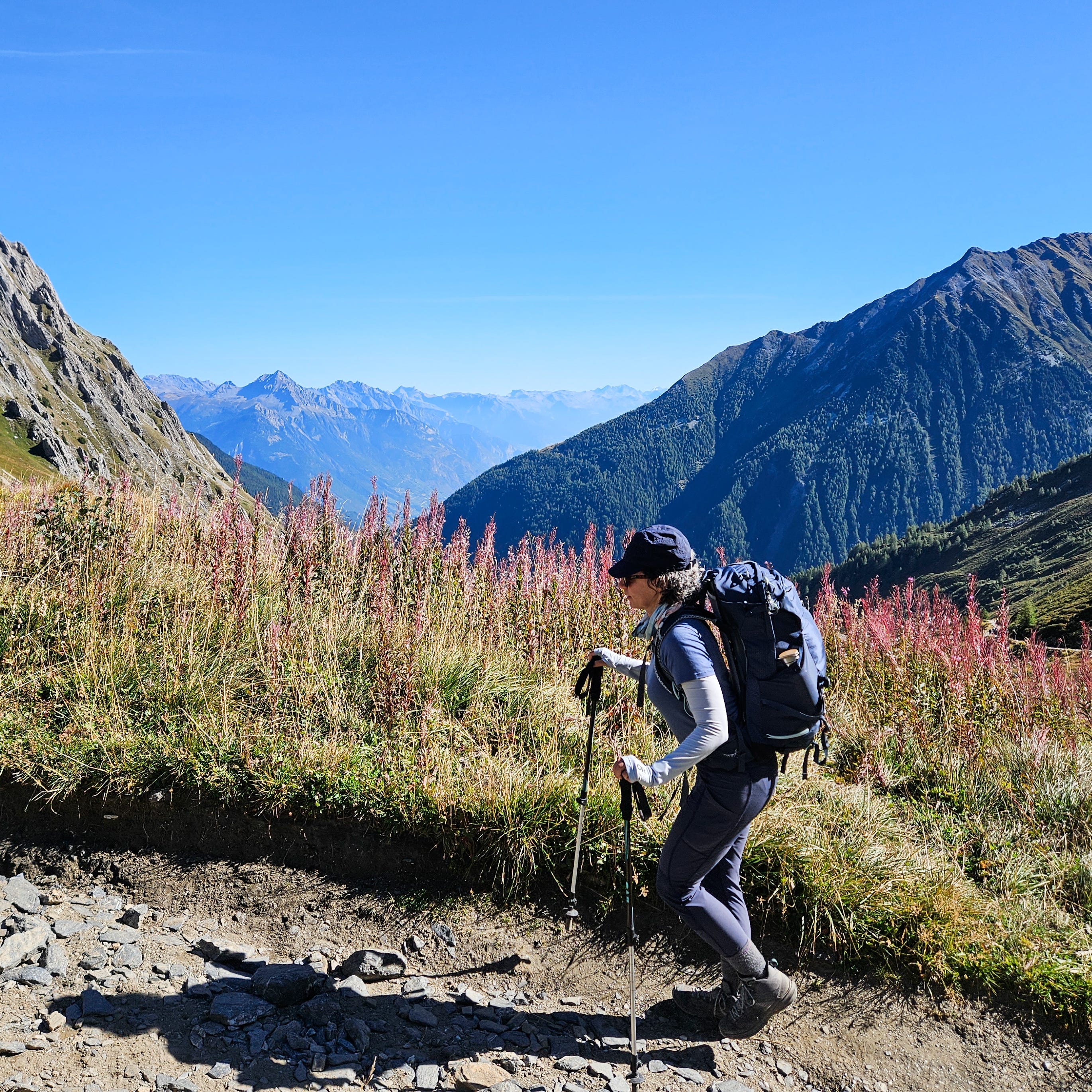
We were of two minds about the crowds that we encountered on the TMB. Certainly there can be a sense of community along the trail. We would often share words of encouragement when we saw the same people over and over again during the hike, and we did have some memorable conversations over dinner.
However, this was easily the most crowded trail that we’ve ever hiked; we were almost never alone on the trail. There were people hiking in both directions, often in large groups, plus the trail runners sprinting past, plus the occasional mountain bikers. If the route was accessible as a day hike, there was even more traffic. Navigating a trail with so many others really pressurized the hiking experience. While we could still take a rest stop to enjoy the view, we had to do it with an endless stream of hikers going past. Our enthusiasm for greeting each hiker with a bonjour or buongiorno quickly passed after a few days. Of course, all these people needed to stay somewhere; see my earlier comments about how much we enjoyed the large-capacity lodges.
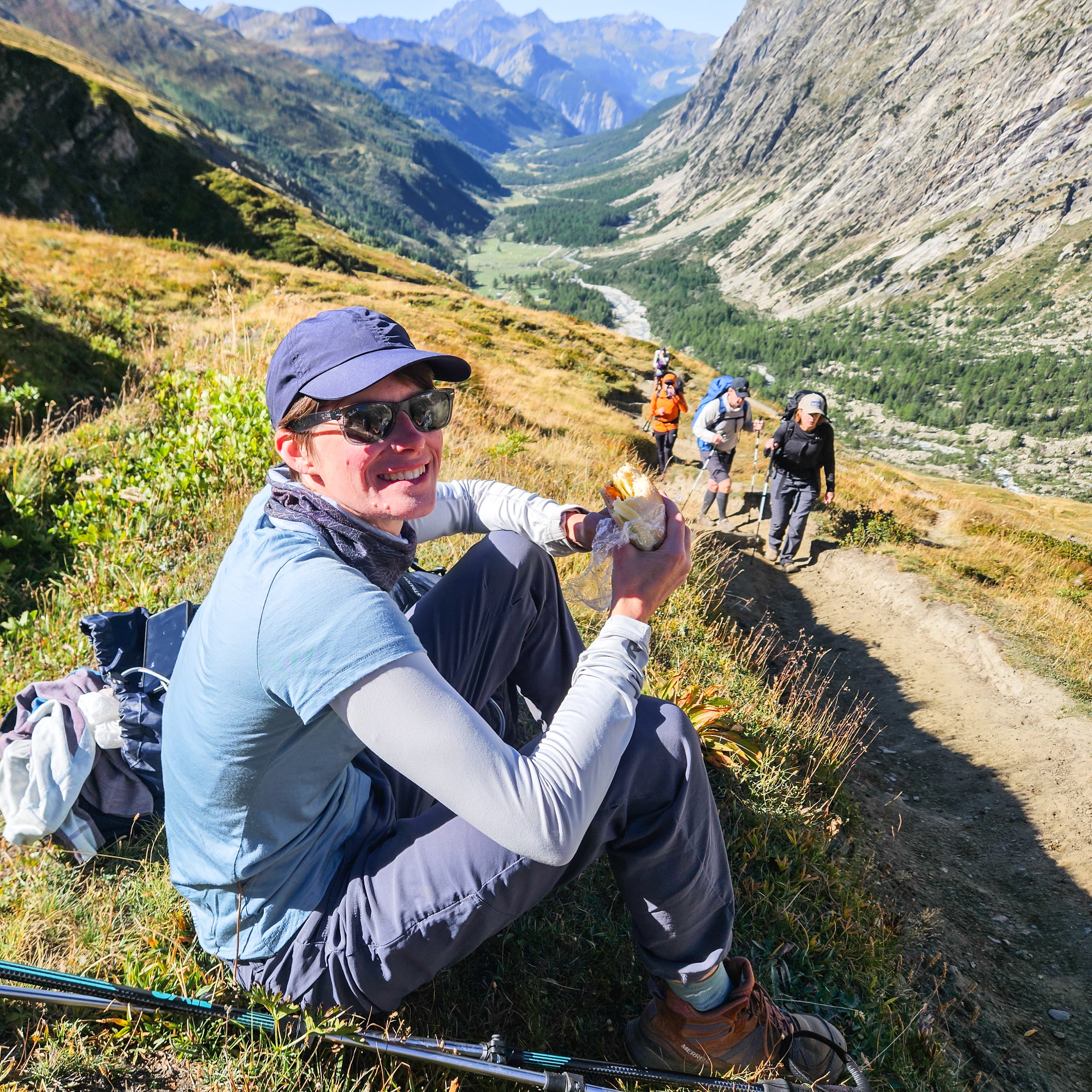
Our final assessment of the TMB was that we loved it (mostly), were happy to have done it, and will certainly never do it again. We would prefer to seek out other hikes that offer their own unique charms but have yet to be discovered by the international crowds. Our past trips that fit the bill are the Peaks of the Balkans, a nine-day trek through the mountains of Albania, Kosovo and Montenegro; the volcanic mountains of La Gomera in the Canary Islands; and the Quilotoa Loop of Ecuador.
While the TMB is a spectacular hike, and certainly deserves its slot in the world’s top ten, our appetite for elbowing our way through a busy trail (while paying mightily for the privilege) is much diminished.
See you on the road,
Stephanie & Gillian
P.S. Ever wondered what it would be like to spend winter in Europe? We’re back at the Canadian Financial Summit this year, sharing what we’ve learned from years of full-time travel. If you’re curious about winter somewhere a little warmer (without spending a fortune), you can register for free access to the summit here. The Canadian Financial Summit is a virtual event from Oct 21 to 24 featuring 40+ financial experts. Hope to see you there!